When two cultures come together in a marriage, the attire is often where it shows most vividly — a red qipao beside a tartan kilt, a white gown finished with gold zardozi embroidery, a sherwani paired with a Western veil. Blending wedding dress traditions lets a couple wear their whole story rather than choosing one half of it. Done thoughtfully, it's one of the most photographed and most personal decisions of the day.
This guide covers the four practical routes to fusion attire, what each costs, how to do it respectfully, and the timeline you'll need. A quick budget anchor first: attire is about 4% of an average wedding, roughly $1,368 of a $34,200 budget — but that figure assumes one outfit per person. A second cultural look or bespoke tailoring can push it well past that, so it's worth modelling in the wedding budget calculator early.
Four ways to blend, and what they cost
There's no single "right" amount of fusion. These four approaches run from a light touch to a full second wardrobe — pick by how much each tradition matters to you and your families, and by budget:
| Approach | What it involves | Cost impact | Best for |
|---|---|---|---|
| Outfit change | One full traditional look, then a second (e.g. qipao → gown) | Highest — effectively two outfits; rentals or heirlooms cut it | Couples wanting each tradition fully represented |
| Hybrid / custom garment | One garment merging elements (gown with cultural embroidery) | Medium–high — bespoke work adds labor cost | Couples who want one cohesive look |
| Accessory-led fusion | Heirloom jewelry, dupatta, sash, headpiece over a base outfit | Low — often free if using family pieces | Subtle nods; tight budgets |
| Custom embellishment | Adding cultural detail to an existing gown or suit | Low–medium — tailoring/handwork only | Keeping a familiar silhouette |
Start with meaning, not aesthetics
Before mixing anything, learn what each garment actually signifies in its tradition — a color, a fabric, or an accessory may be sacred, ceremonial, or purely decorative, and that distinction guides what you can blend freely and what deserves a lighter hand. A few common starting points: Indian saris and lehengas for brides, sherwanis for grooms; Chinese red qipao and Tang suits; West African kente or aso oke; Scottish kilts and tartan; Japanese kimono and uchikake. Reading up on the full ceremonies behind them helps — our guides to Hindu, Chinese, and Muslim wedding traditions are a useful grounding before you decide what to wear.
The outfit change: each tradition, fully
The most common route at intercultural weddings is to wear one tradition for the ceremony and another for the reception — a qipao for the tea ceremony then a white gown, a kilt for vows then a tuxedo, a lehenga then a cocktail dress. It gives each heritage its full moment and makes for a dramatic reveal, but it's the priciest approach since you're buying or renting two looks. Renting one of them, or wearing a family heirloom for the other, keeps it within reach.
Hybrid garments and custom embellishment
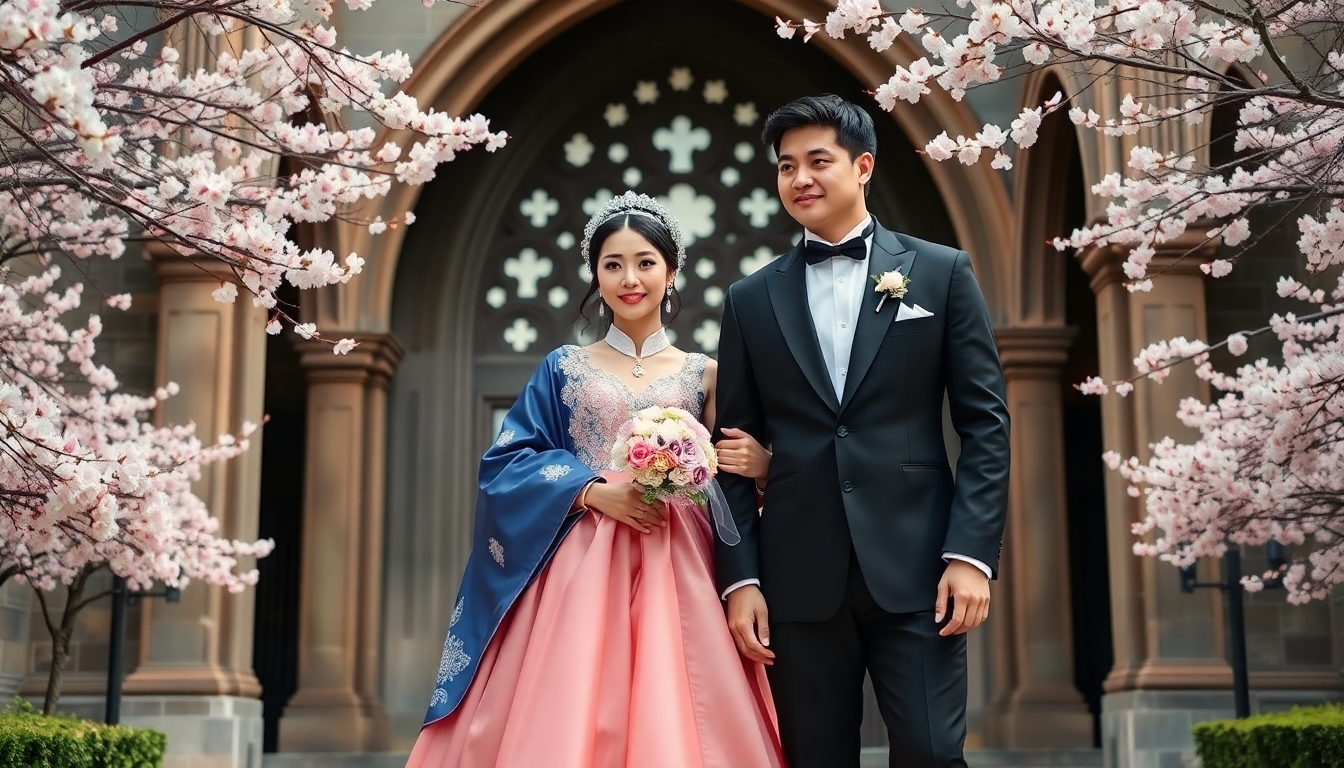
If two full outfits feel like too much — in cost or in changing — one well-designed garment can carry both cultures: a mermaid gown with Indian-inspired beadwork, a tuxedo jacket over a textile that means something to your family, a white silk wrap cut like a kimono. The lighter version is to embellish a base outfit you already love: add cultural embroidery to a classic gown, line a tuxedo with a heritage fabric, or adjust a neckline or sleeve length to honor modesty preferences. Both keep you in one look all day; the difference is how much bespoke handwork (and budget) you commit.
Accessories: the lowest-cost, highest-meaning route
You don't have to overhaul an outfit to honor a heritage. A grandmother's jewelry, a dupatta draped over a Western gown, a sash or belt in a traditional weave, embroidered shoes, or a cultural headpiece can carry enormous meaning at little or no cost — especially when the pieces are passed down. This pairs naturally with incorporating family heirlooms, and it's the easiest fusion to agree on when budgets or family opinions are tight.
Doing it respectfully
Within an intercultural or interfaith marriage, wearing your partner's heritage — with their family's blessing and guidance — is an act of honoring, not appropriation. The lines worth respecting: don't wear items that are sacred or earned (certain religious garments, regalia) if you don't have the standing to, and don't treat any tradition as a costume or theme. The simplest safeguard is to involve family and elders early: ask grandparents what matters, invite parents to help choose pieces, and let the people who hold the tradition guide how it's worn. That conversation usually deepens the meaning rather than complicating it. For the groom's side of the wardrobe, see our groom's attire guide; for the gown journey, the wedding dress shopping guide.
Give yourself enough time
Fusion attire almost always takes longer than off-the-rack. Bespoke or hybrid garments need roughly 6–9 months from design to final fitting; heirloom pieces may need a skilled tailor to alter or restore safely; and traditional garments sourced from abroad can have long lead times and shipping risk. Build the timeline backward from the wedding, order early, and leave room for at least two fittings — especially if multiple cultures' tailors or artisans are involved.
Frequently asked questions
How much does a second or cultural outfit add to the wedding budget?
Attire runs about 4% of an average wedding, roughly $1,368 for one outfit per person. A second cultural look or bespoke fusion garment can effectively double the wearer's attire cost, while accessory-led fusion or family heirlooms add little or nothing. Renting one of two outfits is the usual way to keep an outfit change affordable.
Is it cultural appropriation to wear attire from my partner's culture?
Within an intercultural or interfaith marriage, wearing your partner's heritage with their family's blessing and guidance is honoring it, not appropriating it. The lines to respect are not wearing sacred or earned items you don't have standing to wear, and never treating a tradition as a costume. Involving your partner's family in the choices is the best safeguard.
How do I blend two cultures' attire respectfully?
Start by learning what each garment signifies, distinguishing sacred and ceremonial elements from decorative ones, and involve family and elders in the choices. Honor the meaningful pieces as they're meant to be worn, and treat the blend as a genuine union of two heritages rather than a styling exercise.
How early should I start planning fusion attire?
Earlier than for a single off-the-rack outfit. Custom or hybrid garments typically need 6 to 9 months, heirloom alterations need time with a skilled tailor, and traditional pieces sourced from abroad can have long lead times. Order early and plan for at least two fittings.
What if our families disagree on what we should wear?
An outfit change is the classic compromise — one tradition for the ceremony, the other for the reception — so each family sees their heritage fully represented. Where that's not possible, a hybrid garment or accessory-led approach lets both cultures appear in a single look, and bringing both families into the conversation early usually defuses the disagreement.
Wear your whole story. Model your attire budget in the wedding budget calculator, ground your choices in the cultural wedding traditions guides, weave in family heirlooms, or browse the full ceremony & reception guide.