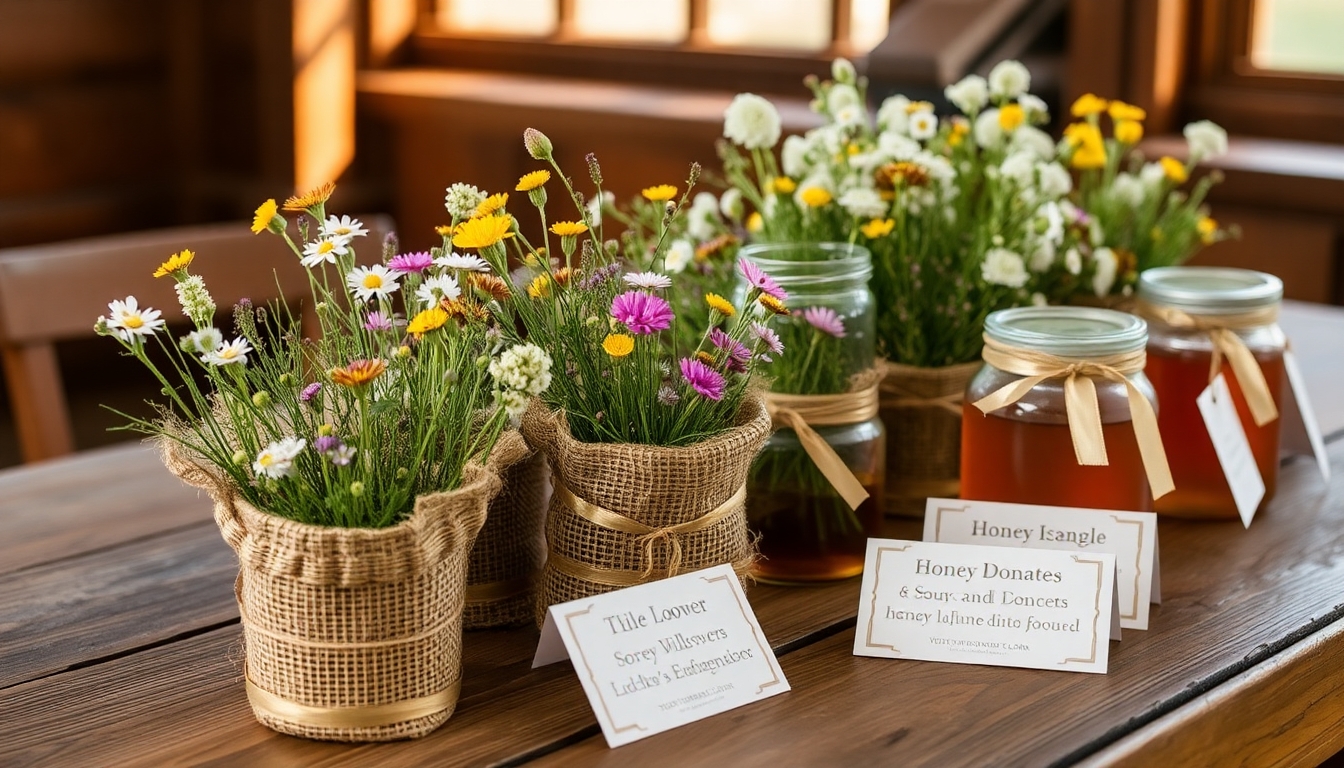
A wedding is one of the few days when everyone you love is in one room, paying attention. That makes it a natural moment to give back — not as a performance, but as a quiet reflection of what the two of you care about. The good news for your budget: most ways to fold charity into a wedding are cost-neutral, and several actually save money by redirecting spending you were going to do anyway.
This guide covers the practical options — donations in lieu of favors or gifts, charity registries, rescuing leftover food and flowers, ethical sourcing, and hands-on volunteering — with an honest note on cost, effort, and the etiquette of asking guests to give. The line item most couples reach for first is favors, which run about 1.5% of an average budget, roughly $513 of a $34,200 wedding (see how that fits the whole picture in the wedding budget calculator). Redirect that toward a cause and you lose nothing your guests will miss.
Ways to give back, by cost and effort
Not every option suits every couple. Use this to find the ones that fit your values, your budget, and how much you want to take on:
| Approach | What it costs you | Effort | Best for |
|---|---|---|---|
| Donation in lieu of favors | Cost-neutral (replaces the ~$513 favors line) | Low | Couples who never loved trinket favors |
| Charity gift registry / fund | Free to set up | Low | Couples who already own a home |
| Rescue leftover food | Usually free; sometimes a small pickup fee | Medium (arrange before the day) | Caterers with surplus plated/buffet food |
| Repurpose flowers | Free–low (nonprofit collects) | Medium (book the charity early) | Florals-heavy weddings (~9% / $3,078) |
| Ethical or secondhand attire | Often cheaper than new | Medium | Couples open to pre-loved or sustainable brands |
| Volunteer day / activity station | Low (materials only) | High | Hands-on couples and tight-knit wedding parties |
| Carbon offset | Low (tens of dollars) | Low | Destination or large guest-count weddings |
Donations in lieu of favors
Wedding favors are the easiest swap. Instead of trinkets most guests leave behind, make a donation in their honor and tell them with a small card at each place setting: "In lieu of favors, a gift has been made to [cause] in your name." It reads as generous, not preachy, and it frees up the favors budget for something that lasts. If you want guests to still take something home, plantable seed cards or fair-trade chocolate split the difference — a small object and a cause.
Donations in lieu of gifts: the etiquette
Asking guests to donate instead of buying gifts is increasingly normal, especially for couples who already share a home. The etiquette is simple: offer it, never demand it. Set up a charity fund alongside (not instead of) a regular registry, so guests who prefer to give a traditional gift still can. Put the option on your wedding website rather than printed on the invitation itself — gift instructions on an invitation still read as presumptuous to some. Naming two or three causes, rather than one, lets guests pick something that resonates with them. For more on framing this gracefully, see our wedding registry guide.
Rescue the food and the flowers
Two of the biggest, most wasteful line items can do double duty. Leftover food from a catered wedding can often be donated to a local shelter or food-recovery program — arrange it with your caterer and the receiving organization before the day, since food-safety rules govern what can be given and how fast. Flowers, which eat about 9% of the budget (around $3,078), can get a second life: nonprofits in many cities collect wedding arrangements and redeliver them to hospitals, hospices, and nursing homes the next morning. Book the pickup early and tell your florist so the arrangements are easy to transport. If you want the blooms themselves to mean something, pair this with the language of flowers.
Ethical and sustainable choices
Giving back can also mean spending the budget you already have more thoughtfully:
- Choose caterers who source locally and donate surplus food as standard practice
- Wear secondhand, rental, or sustainably made attire — often cheaper than buying new, and a meaningful way to trim the ~4% / $1,368 attire line
- Pick invitations on recycled or seed paper, or go digital for save-the-dates
- Hire vendors with social-responsibility programs — some contribute a share of their fee to charity
These aren't add-ons so much as a lens on decisions you're already making — which is exactly why they rarely cost extra. Several overlap with the ideas in trimming your budget without sacrificing style.
Hands-on giving
If you'd rather do than donate, build giving into the celebration itself. A group volunteer session with your wedding party in the week before the wedding turns prep into something shared. A reception "activity station" — assembling care packages or writing cards for a cause — gives guests something to do between courses. Some couples plan a post-wedding volunteer morning for guests who've travelled in and want more time together. These take real coordination, so pick one and do it well rather than scattering several half-formed ideas across the day.
Offsetting a large or destination wedding
If you're flying guests in or marrying abroad, the celebration carries a real carbon footprint. Calculating it and buying offsets costs only tens of dollars, and planting trees to mark the marriage is a low-cost gesture that doubles as a keepsake. It won't undo the travel, but it's an honest acknowledgement — and a fitting one for couples for whom sustainability is part of the point.
Telling guests — without lecturing
The difference between charitable and self-congratulatory is tone. Share your choices simply: a short line on the wedding website, a discreet card at each setting, a sentence from your officiant if it fits the ceremony. Explain the why in one breath, then let the day be about the marriage. Guests notice generosity far more when it's understated.
Frequently asked questions
How do I ask guests to donate to charity instead of giving gifts?
Offer it as an option, never a requirement. Set up a charity fund alongside a regular registry so guests can still give a traditional gift if they prefer, and put the request on your wedding website rather than on the invitation itself. Naming two or three causes lets guests choose one that resonates with them.
Are charitable wedding donations tax-deductible?
It depends on who gives and how. A donation a guest makes directly to a registered nonprofit (a 501(c)(3) in the US) is generally deductible by that guest, and a donation you make in lieu of favors is deductible by you — but a contribution routed through a couple or a for-profit platform may not be. Keep the receipts and confirm specifics with the charity or a tax professional.
Does a charitable wedding cost more?
Usually not. Most options are cost-neutral — donating in lieu of favors simply redirects the ~1.5% / $513 you'd have spent on trinkets — and some, like secondhand attire or rescued flowers, save money. Volunteer activities and carbon offsets add only small, optional costs.
What can I do with leftover food and flowers?
Many caterers will donate surplus food to a local shelter or food-recovery program if you arrange it in advance and follow food-safety rules. Flowers can be collected by floral-rescue nonprofits that redeliver arrangements to hospitals and care homes the next day. Both need to be booked before the wedding, not decided on the night.
How do I set up a charity registry?
Major registry platforms let you add a charity or cash-style fund alongside your gift list, or you can link directly to a nonprofit's donation page or a charity-gift-card service. Set it up early so it's ready when you share your wedding website, and describe the cause in a sentence or two so guests know what they're supporting.
Give the day a second purpose. Price your favors and giving budget in the wedding budget calculator, set up a thoughtful gift list with our wedding registry guide, weave meaning into your blooms via the language of flowers, or browse the full style & inspiration guide.